The app development industry has a dirty secret: most project delays don't happen because developers can't write code fast enough. They happen because teams underestimate the brutal reality of quality assurance, regression testing, and the endless cycle of "just one more fix" that stretches timelines into oblivion.
Now Google has made this problem exponentially worse.
The Hidden Cost of Android's Need for Speed
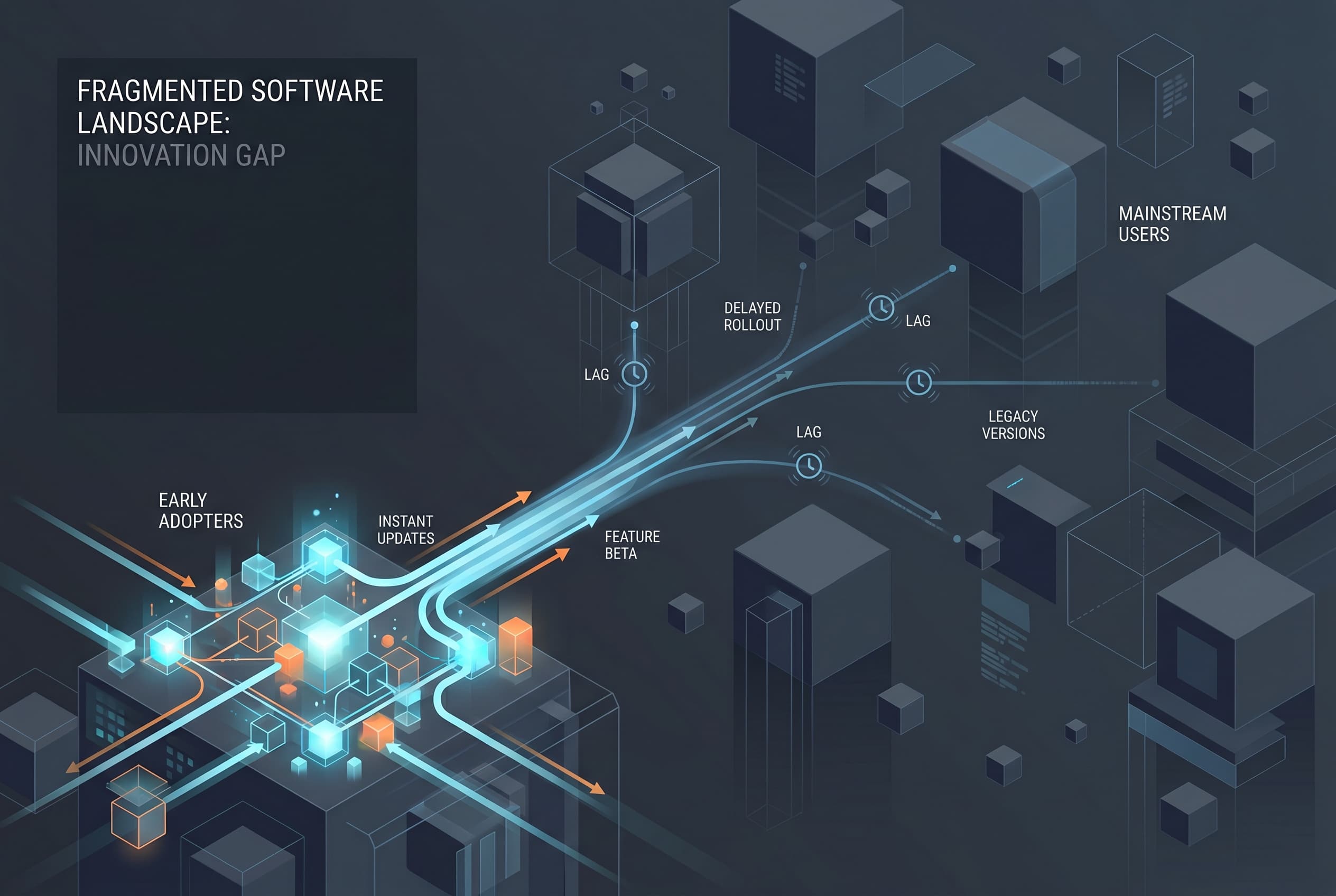
Google's shift to two major Android SDK releases annually—with Quarterly Platform Releases (QPRs) now regularly shipping new developer APIs—represents a fundamental restructuring of the mobile development landscape. But this isn't just about faster innovation. It's about a structural choice that prioritizes hardware ecosystem readiness over developer workflow stability.
The numbers tell the story: Android developers must now navigate over 24,000 unique device configurations while adapting to four annual release windows instead of one predictable yearly cycle. Each QPR that includes new APIs doesn't just add features—it multiplies the testing matrix exponentially.
Consider the cascading effect: when Android 16 QPR2 ships with new APIs but "without app-impacting behavior changes," developers face a false choice. Technically, adoption is optional. Practically, marketplace pressure from Google Play compatibility requirements makes ignoring new APIs a path to obsolescence.
When Quality Assurance Becomes Quality Impossible
The research reveals a troubling pattern: app development delays stem primarily from underestimated QA cycles and late-stage defect discovery, not coding bottlenecks. Android's QPR acceleration transforms this challenge from manageable to Sisyphean.
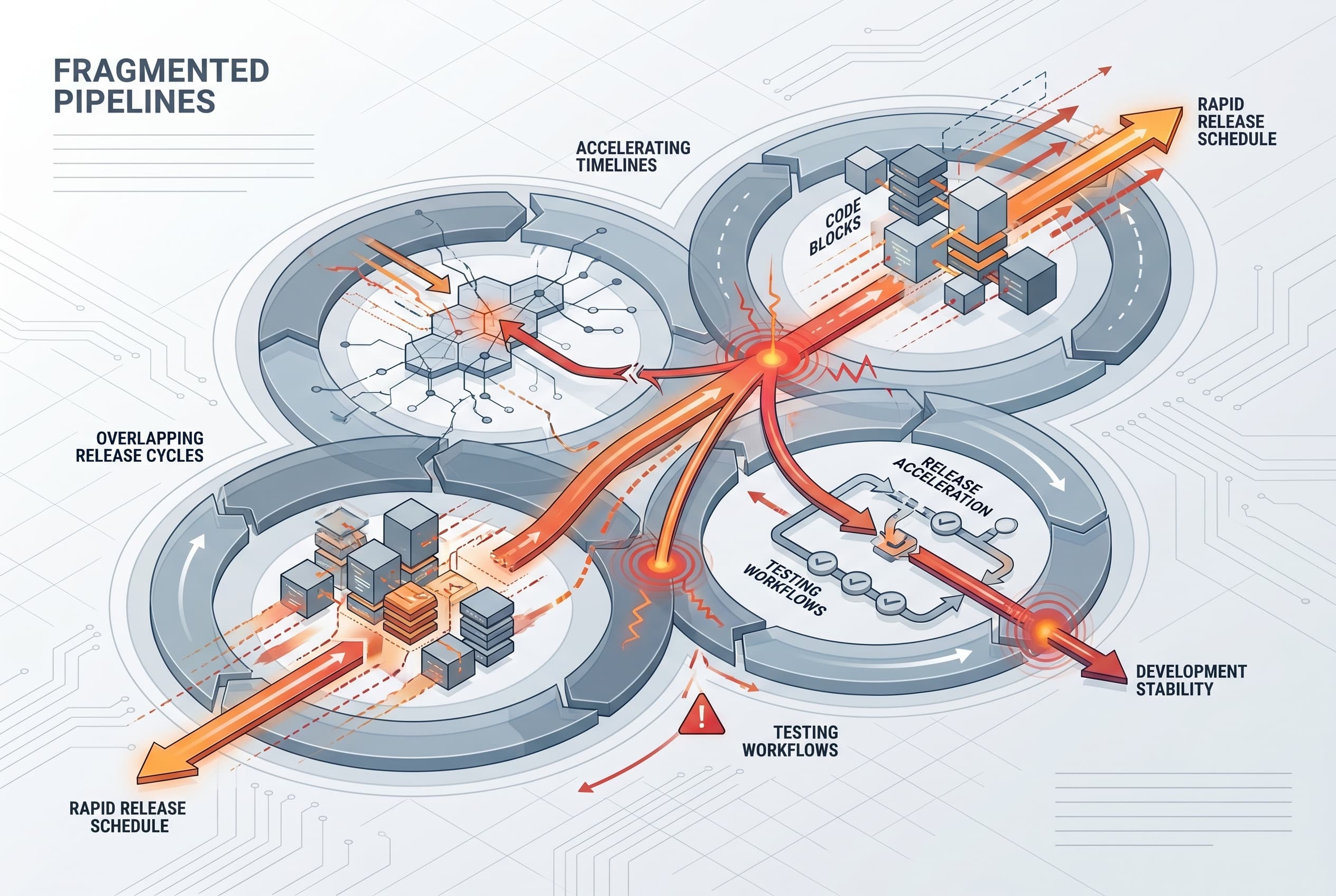
Here's why: regression testing complexity compounds with each release cycle. A single new API can affect existing functionality across thousands of device configurations. When Google ships QPRs every three months with new developer-facing changes, teams get trapped in perpetual regression cycles.
Twitter's response illuminates the scale of this problem. The company completely overhauled its Android development philosophy, putting physical device stacks on every developer's desk and implementing "Android Brain" overlapping release cycles. This isn't optimization—it's survival adaptation to an unsustainable platform velocity.
The Fragmentation Paradox
Google's messaging frames Android's device diversity as consumer choice and ecosystem strength. From a developer perspective, it's a quality assurance nightmare that QPR cycles have made exponentially worse.
Intel's Jeff McVeigh identifies Android fragmentation as "a common pain point" driving developers toward cross-platform solutions. The data supports this: hybrid frameworks like React Native and Flutter gain adoption partly because they decouple teams from Android's release treadmill.
More telling is the surge in WebView-based app development. Developers increasingly choose web standards over native Android APIs not for technical superiority, but for release cycle independence. When your platform's velocity exceeds your development team's absorption capacity, the platform becomes the problem.
The Beta Testing Blind Spot
Google's QPR beta program reveals another structural flaw. Beta builds pass preliminary testing but aren't CTS-approved (Compatibility Test Suite). Apps using Play Integrity API may not function normally, creating testing blind spots precisely when developers need validation most.
This isn't a technical oversight—it's the inevitable result of accelerated cycles. Google can't provide stable pre-release validation infrastructure when the platform itself operates in perpetual beta.
Adarsh Fernando, Google's Senior Product Manager, frames the faster schedule as driving "higher stability and polish." But the evidence suggests the opposite: QPR beta builds acknowledge "various stability, battery, or performance issues" and warn against daily use.
The Technical Debt Time Bomb
Rapid release cycles create a hidden form of technical debt: integration debt. Every new API that arrives mid-development cycle forces teams to choose between feature completeness and release timeline adherence.
The pattern is predictable: teams defer API adoption to meet deadlines, then face compatibility pressure from Google Play. The result is rushed integration work, inadequate testing coverage, and user-facing bugs that could have been prevented with proper development cycles.
Google's adjustment of Android Studio's release cycle—prioritizing underlying IntelliJ platform updates over Android-specific features—suggests the company recognizes this problem. But tool stability can't compensate for platform instability.
The Ecosystem Alignment Trap
Google's rationale for QPR acceleration centers on aligning with device manufacturer launch schedules. Moving major releases to Q2 enables faster ecosystem-wide adoption by matching OEM and silicon vendor timelines.
This reveals the core issue: Google has optimized Android's release cycle for hardware partners, not software developers. The structural choice prioritizes device ecosystem velocity over app development workflow sustainability.
The consequences ripple through the entire development community. Teams that once planned annual compatibility updates now face quarterly decision points about API adoption, testing cycles, and feature prioritization.
Breaking the Cycle
The solution isn't slowing Android development—it's acknowledging the mismatch between platform velocity and developer absorption capacity. Google's target API level requirement won't count minor releases, which reduces one compatibility barrier. But this addresses symptoms, not root causes.
Real solutions require infrastructure investment:
- Predictable API stability windows that guarantee no breaking changes for defined periods
- Enhanced compatibility testing tools that automate regression validation across device matrices
- Decoupled feature adoption that separates security updates from API changes
- Developer-first release communication that prioritizes workflow planning over marketing announcements
The current path leads to a two-tier ecosystem: well-resourced teams that can absorb QPR velocity, and everyone else forced into cross-platform alternatives or perpetual technical debt.
The Real Innovation Tax
Google's faster Android release cycle isn't just changing how apps get built—it's changing who can afford to build them. When platform velocity exceeds reasonable development workflow capacity, innovation becomes a privilege of resource abundance rather than creative capability.
The QPR acceleration may drive faster ecosystem adoption and enable cutting-edge device features. But it's breaking the sustainable development practices that built Android's app ecosystem in the first place.
Developer whiplash isn't a side effect of Android's evolution—it's a structural feature of Google's current platform strategy. Until that changes, the Android development community will continue adapting by building less Android-dependent solutions.
The irony is profound: in accelerating Android's pace of change, Google may be accelerating developers' departure from native Android development entirely.