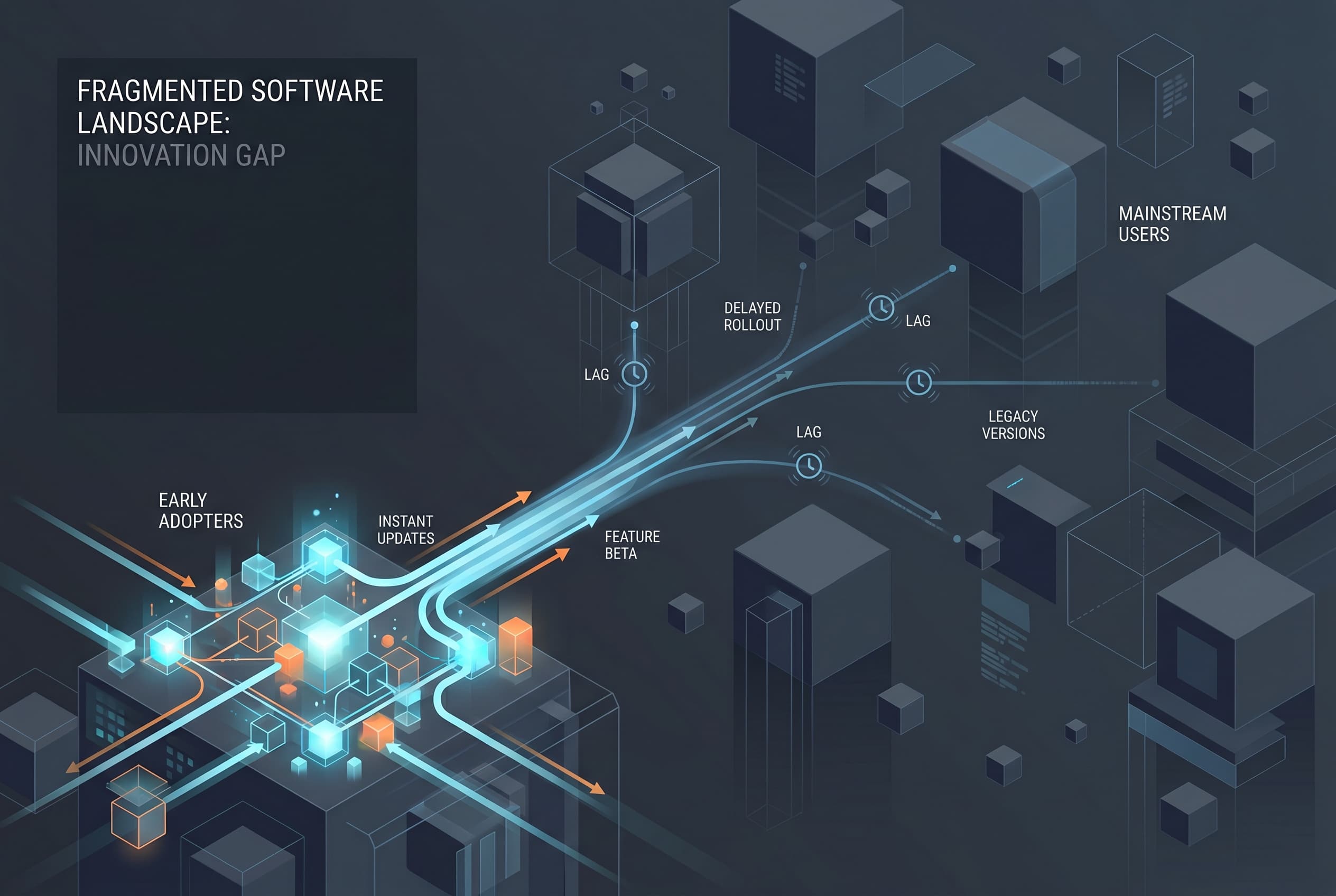
The corporate world runs on predictability, but Google's Android ecosystem increasingly operates on Silicon Valley time. As Android 17 QPR1 Beta 2 rolled out just two weeks after Beta 1 in early 2026, enterprise IT departments found themselves confronting an uncomfortable reality: the mobile operating system powering their business-critical applications was evolving faster than their ability to validate, test, and deploy updates safely.
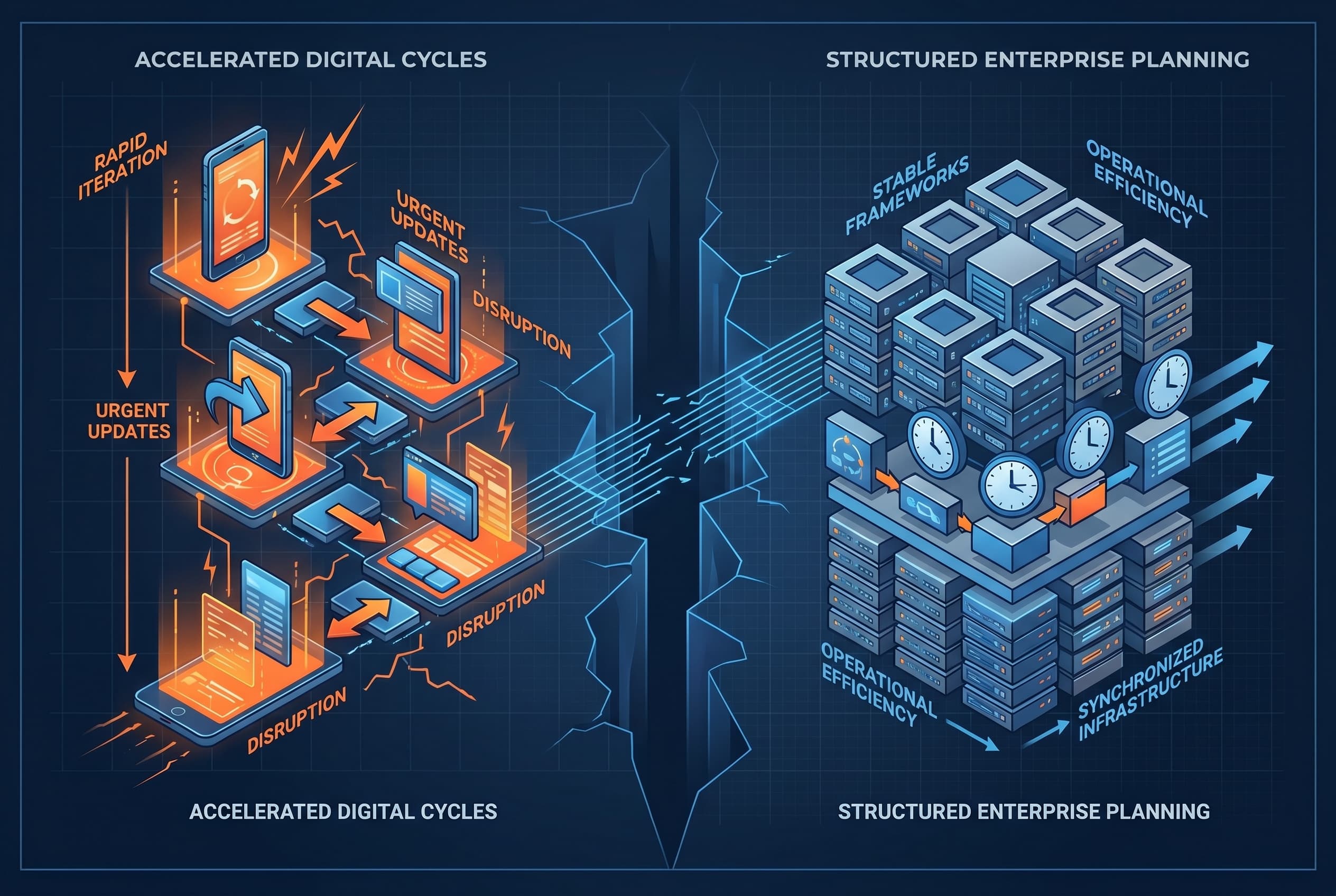
This acceleration represents more than just frequent software updates—it's a fundamental mismatch between consumer-oriented development cycles and enterprise operational requirements that's forcing CISOs to choose between security imperatives and operational stability.
The Treadmill Problem: When Security Meets Operations
Android's origins as a consumer operating system continue to shape its development philosophy, creating what VDC Research analysts describe as an "upgrade treadmill" for enterprises. Unlike traditional enterprise systems that prioritized stability and infrequent, optional updates, Android's constant cadence creates what researchers call a "near-permanent test cycle" for IT teams.
This creates a cascade of operational challenges. Every minor release requires validation of core applications, device settings, and peripheral compatibility. IT departments barely establish stable baselines before the next update arrives, demanding renewed testing cycles. The situation becomes more complex when replacement devices arrive with newer, non-rollbackable Android versions, effectively forcing fleet-wide upgrades regardless of enterprise readiness.
The data reveals the scope of this challenge: Android 10 reached end-of-life for Google security updates, with device-specific deadlines varying by manufacturer. Microsoft Teams certification on Android 10 ends September 3, 2026, but upgrading to Android 12 extends support until August 15, 2027. These staggered timelines create a complex matrix of compatibility requirements that strain IT planning resources.
The CISO's Impossible Choice
The acceleration of Android's development cycle has fundamentally altered the risk calculation for enterprise security leaders. As VDC Research notes, "CISOs now make many decisions, colliding security-first changes with fragile business-critical apps." The traditional enterprise approach of extensive testing before deployment conflicts directly with the security imperative of rapid patching.
This tension is particularly acute because Android updates are increasingly non-negotiable from a security perspective. Google argues that regular patching is essential for preventing large-scale breaches, positioning frequent updates as providing a "stable, reliable baseline" long-term through consistent security improvements. However, this security-first approach often destabilizes business-critical applications that haven't been validated against the latest Android version.
The beta instability trends compound this challenge. User reports highlight risks such as Pixel 9 Fold wake-up issues after opting into Android betas, amplifying enterprise caution around unproven releases. Yet the pressure to stay current with security patches means enterprises can't simply avoid updates—they must navigate between operational stability and security requirements.
Vendor Solutions and Market Adaptations
Recognizing these enterprise challenges, some vendors have developed innovative solutions to decouple businesses from Google's raw update cadence. Logitech's approach with CollabOS exemplifies this trend: "We're making Android 12 available for all CollabOS devices... companies don't need to worry if devices will get left behind," explains Bruno Coutinho, Product Lead for CollabOS.
This vendor overlay approach allows enterprises to upgrade operating systems without complete hardware replacement, extending IT refresh cycles while maintaining security compliance. Similarly, refurbished Pixels have gained favor in enterprise environments specifically because they receive OS updates and security patches first, enabling controlled testing environments separate from production deployments.
These solutions represent a market adaptation to Google's consumer-oriented development cycle, creating enterprise-friendly layers that provide stability while maintaining security currency. However, they also add complexity and cost to enterprise Android deployments, requiring additional vendor relationships and management overhead.
The Budget Impact: Planning for the Unpredictable
The financial implications of accelerated Android cycles extend beyond immediate upgrade costs. Enterprise budgeting traditionally operates on annual or multi-year cycles, but Android's development pace creates ongoing, unpredictable expenses. Validation testing, application compatibility updates, user training, and potential hardware replacements all generate costs that are difficult to forecast accurately.
Android Enterprise's zero-touch enrollment and scalable deployment tools help manage some operational costs, making the platform viable for businesses of all sizes rather than just large enterprises with dedicated IT resources. However, the underlying challenge remains: enterprises face constant pressure to upgrade in an environment designed for consumer adoption patterns rather than corporate planning cycles.
The end-of-life pressures exemplify this budget strain. When Android 10 reached EOL, enterprises faced compressed timelines for major upgrades, often requiring accelerated hardware refresh cycles and intensive application testing. These unplanned expenses disrupt carefully constructed IT budgets and force reactive rather than strategic technology investments.
Rethinking Enterprise Android Strategy
The acceleration of Android's development cycle—highlighted by the rapid Android 17 QPR beta releases—signals that this tension will only intensify. Google's integration of deeper AI features and platform reimagining with Android 16 suggests even faster development cycles ahead, as the company positions Android for hybrid work environments and emerging technologies.
Enterprise IT leaders must fundamentally rethink their Android strategy to address this new reality. Traditional approaches of extensive pre-deployment testing and delayed adoption are increasingly incompatible with security requirements and vendor support timelines. Instead, enterprises need continuous testing capabilities, parallel validation environments, and more agile deployment processes.
The most successful enterprise Android strategies increasingly involve hybrid approaches: maintaining stable production environments while operating continuous testing pipelines that can rapidly validate new releases. This requires investment in testing infrastructure and processes that mirror consumer development cycles rather than traditional enterprise deployment patterns.
The Path Forward: Balancing Innovation and Stability
Google's celebration of 10 years of Android Enterprise highlights the platform's evolution from a consumer-first OS to a legitimate enterprise solution. However, the fundamental tension between consumer development cycles and enterprise operational requirements remains unresolved. The accelerated beta cycles represent Google's commitment to innovation and security, but they also create ongoing challenges for enterprise adoption.
The solution likely lies not in slowing Google's development pace—which would compromise security and innovation—but in developing more sophisticated enterprise adaptation mechanisms. This includes better vendor overlay solutions, more granular update controls, and enterprise-specific support models that provide stability without sacrificing security.
As Android continues to evolve at Silicon Valley speed, enterprises must develop the operational agility to match. The alternative—falling behind on security updates or struggling with unsupported systems—presents far greater risks than adapting to Google's accelerated development cycle. The question isn't whether enterprises can afford to keep pace with Android's evolution, but whether they can afford not to.