Most conversations about landing pages stop at the moment a visitor clicks "Submit." That's a mistake. The click is not the finish line — it's the handoff. A landing page that generates a 12% conversion rate but feeds sales garbage leads is arguably worse than one converting at 4% with pipeline gold. Understanding this distinction, and the mechanics on both sides of the form, is what separates marketing teams that generate revenue from those that generate vanity metrics.
The Benchmark Trap
It's tempting to treat "good" conversion rate as a universal number. It isn't. The global median across industries sits at 6.6%, but that figure masks enormous variance: financial services pages convert at a median of 8.4%, while SaaS companies typically manage only 3.8%. Within B2B SaaS itself, the split is even starker — self-serve signup pages aim for 4–10%, while demo-request pages, which ask for a bigger commitment, average just 1.5–4%.
This matters because benchmarking against the wrong category leads to false alarms. A SaaS marketing team panicking over a 4% conversion rate might actually be sitting on a healthy page — the problem, if there is one, is more likely downstream in lead quality than upstream in page design. Compare that to the baseline reality of generic websites, which convert at just 2.35% on average. Dedicated landing pages exist precisely to escape that number, and they do: landing pages built for signups average 23% conversion, outperforming every other opt-in format, including pop-ups and slide-ins.
Five Friction Points That Kill Conversions Before They Happen
Before any messaging or offer strategy comes into play, technical and structural friction determines whether a visitor even reaches the CTA in a frame of mind to act.
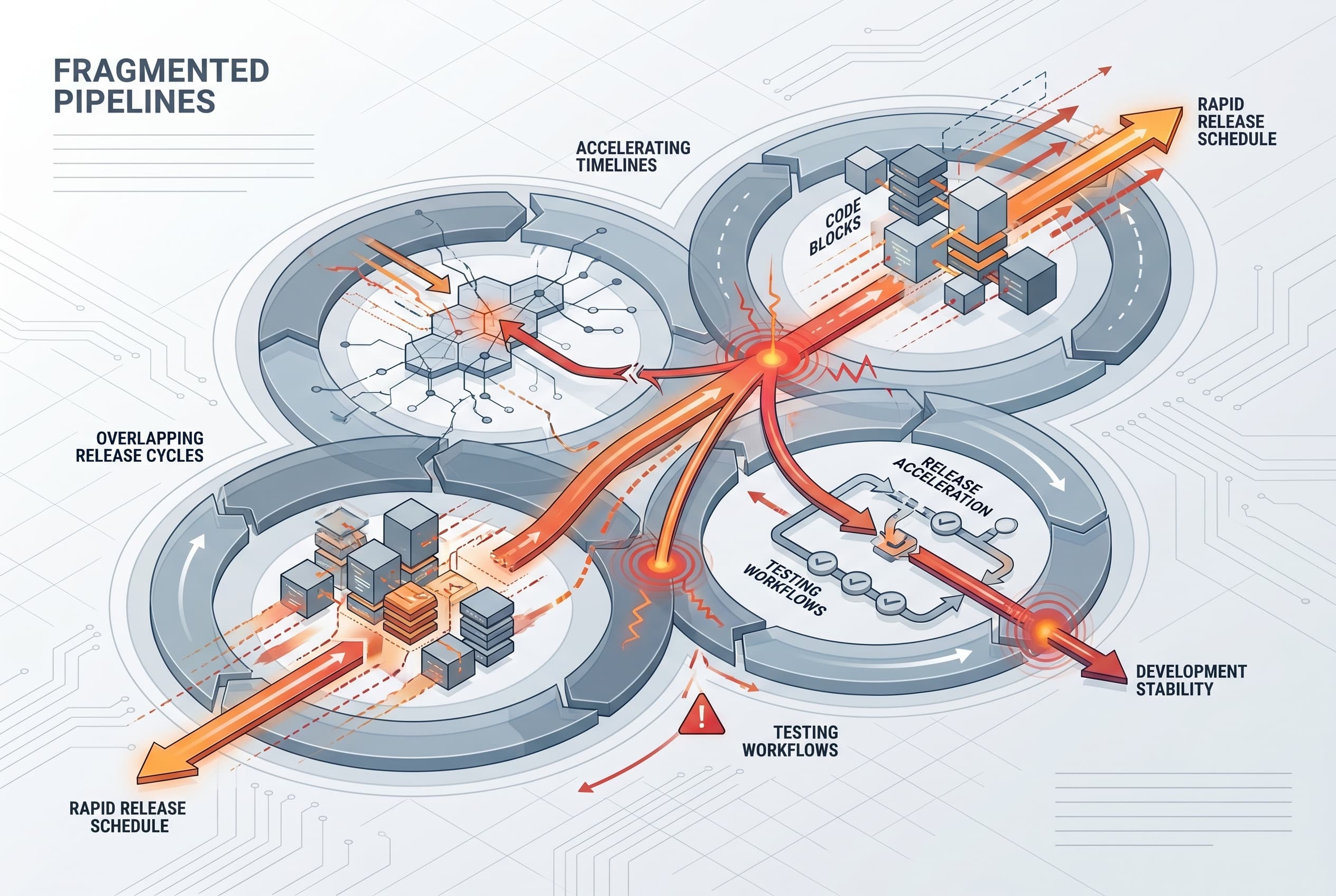
Speed. Pages loading in under 3 seconds convert 32% better than slower ones. Shaving load time down to under 2.4 seconds can double a 10% conversion rate to 20%. The math is unforgiving: every additional second of load time costs roughly 7% in lost conversions.
Form length. Cutting a form down to four fields or fewer can lift a 7% conversion rate to 15.4%. Each field beyond three costs 4–5% in conversion. Yet this isn't a call to strip forms to nothing — more on that below.
Mobile design. Mobile devices now drive 82.9% of landing page traffic, but mobile conversion still lags desktop by about 8%. Call this the mobile paradox: the channel carrying the most traffic converts the worst, and 86% of top-performing pages are mobile-optimized, suggesting the gap is fixable, not fundamental.
Copy complexity. Pages written at a 5th–7th grade reading level convert at 11.1%, compared to 5.3% for pages written at an 8th-grade level or higher. This isn't about dumbing down a product — it's about reducing the cognitive tax a visitor pays to understand what you're offering.
Offer clarity. Pages built around a single offer and a single CTA dramatically outperform pages juggling multiple asks. One documented case saw conversion jump from 9% to nearly 33% simply by removing competing offers. Single-CTA pages convert 13.5% higher than multi-CTA pages generally.
The Uncomfortable Truth About Raising Your Conversion Rate
Here's where most landing page advice quietly falls apart. Optimization tactics that raise the rate of form submissions don't automatically raise the value of what comes through the form. Analysts at Daydream, who work extensively with B2B SaaS pipelines, argue that teams should stop worshipping raw conversion rate and instead optimize for pipeline yield — how many of those form-fills become sales-qualified leads and, eventually, closed revenue.
This reframes several "best practices" as double-edged. Slashing form fields to the bare minimum boosts submissions, but it can also strip away the qualifying information — company size, budget, use case — that sales teams need to prioritize follow-up. Removing that context doesn't eliminate friction; it just moves it downstream, from the marketing form to the sales call, where it's more expensive to resolve. The fix isn't refusing to shorten forms — it's being deliberate about which fields you cut and which you protect because they predict deal quality.
The same logic applies to industry comparisons. A financial services page converting at 8.4% and a SaaS page converting at 3.8% aren't failing or succeeding relative to each other — they're solving different problems with different sales cycles and different buyer psychology. Judging a demo-request page by self-serve signup benchmarks is a category error that sends teams chasing the wrong fix.
What Actually Happens After the Click
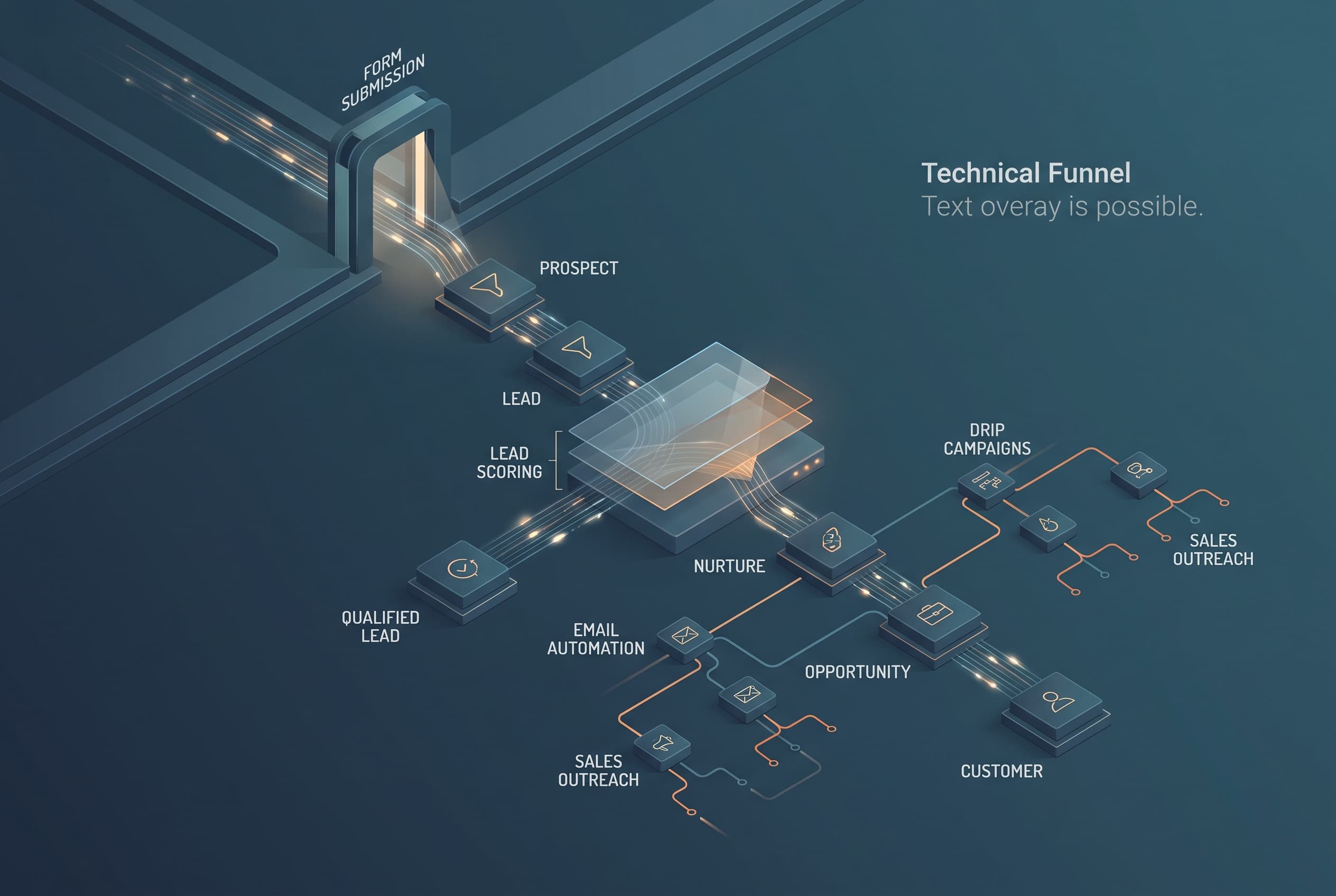
Most landing page playbooks end at the thank-you page. That's backwards. The moment someone submits a form, a second, less-discussed optimization process should already be running.
Deliver value immediately. Whether it's a downloadable guide, webinar access, or account activation, the fastest way to build trust post-submission is to confirm the transaction with instant delivery. A delayed or vague confirmation is often where new leads quietly disengage.
Score and route before the lead cools. For B2B teams, the priority shifts instantly from "we got a lead" to "is this lead sales-qualified, and who should own it?" Pipeline yield thinking means every submission gets triaged, not just logged.
Lean into email, not retargeting. This is where recent privacy shifts change the playbook meaningfully. Third-party cookie deprecation and iOS privacy updates have quietly degraded retargeting as a conversion channel — historically one of the highest-performing tools marketers had. Meanwhile, email traffic converts at 19.3%, nearly double the rate of paid search. The practical implication: the post-submission nurture sequence, built on first-party data collected at the point of conversion, is becoming more valuable than the ad dollars spent trying to re-attract someone who left.
Track the right numbers. Cost per lead is a vanity number if lead quality and revenue per visitor aren't tracked alongside it. A SMART goal — specific, measurable, achievable, relevant, time-bound, such as growing webinar signups from 50 to 150 per month within 60 days — gives teams a concrete target instead of an abstract mandate to "improve conversion."
The Coming Shift: Personalization as Default, Not Feature
Looking ahead, the gap between generic and personalized landing experiences is widening fast. AI-driven personalization is already delivering measurable lifts — around 40% in some studies — by adjusting headlines, imagery, and offers to match visitor intent in real time. Personalized CTAs alone have turned 12% conversion rates into 36%, a jump that dwarfs most copywriting tweaks. Simple tactics like using UTM parameters to swap in industry-specific testimonials or hero images are becoming table stakes rather than advanced techniques.
Combine that with the retargeting decline forced by privacy regulation, and a clear pattern emerges: the landing page itself — not the ad, not the retargeting pixel — is becoming the primary place where relevance has to be built, because it may be the only high-fidelity data touchpoint a marketer gets before the visitor decides whether to become a lead at all.
The Real Takeaway
A landing page isn't a conversion machine; it's the first stage of a relationship. The pages that will win going into 2026 are the ones designed with both halves of that relationship in mind: fast, clear, single-focused experiences that respect the visitor's time, paired with a post-submit process disciplined enough to turn a form-fill into a qualified opportunity rather than a name in a spreadsheet. Optimizing only the click gets you more leads. Optimizing the whole journey gets you more clients.